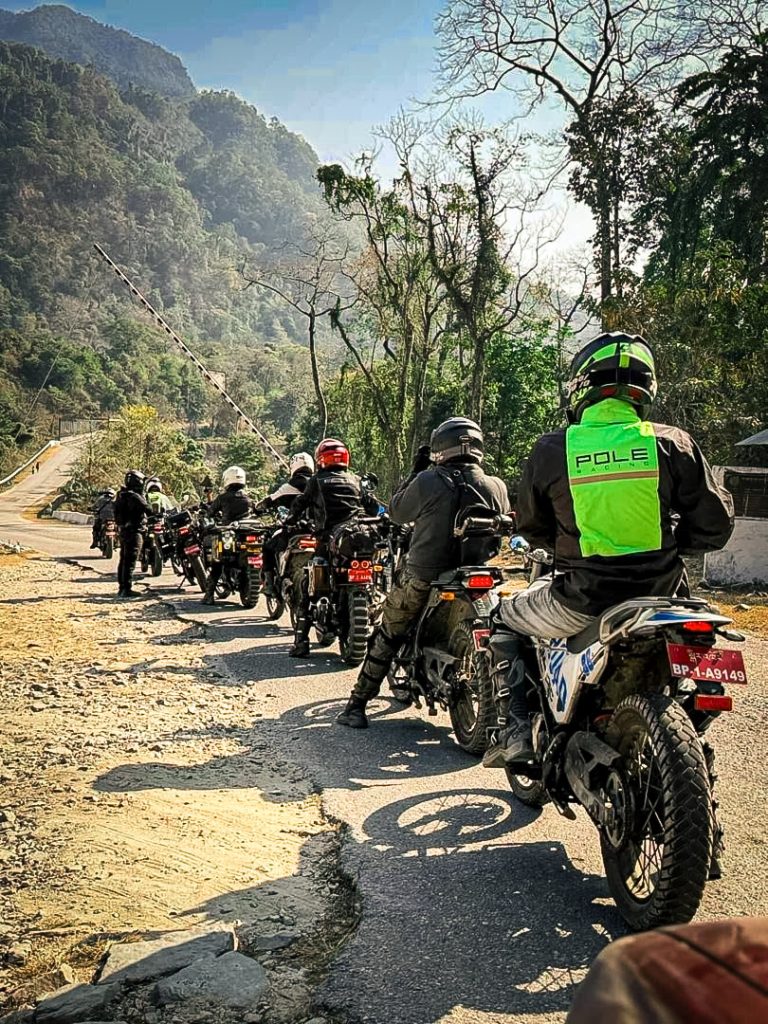
Engines echo differently in Bhutan’s mountains—clean, sharp, and uninterrupted. A motor biking tour in Bhutan is not about speed but about flow, elevation, and awareness. Unlike chaotic Himalayan routes elsewhere, Bhutan offers controlled traffic, disciplined driving culture, and roads that feel intentionally quiet. As a result, riders experience something rare: uninterrupted connection between machine, landscape, and mind.
Meanwhile, as the journey unfolds, every bend reveals contrast. Dense pine forests suddenly open into wide valleys. Prayer flags mark high passes, and chortens appear at unexpected turns. What makes this motor biking tour in Bhutan distinct is how naturally culture integrates into the ride—you don’t stop for it; you ride through it.
By the final days, whether ending in Paro or Phuentsholing, most riders notice a shift. The pace slows internally, even if the engine stays steady. Instead of chasing distance, you begin to notice details—the scent of burning juniper, the echo of monastery horns, and the way clouds settle over ridgelines before rain.
The descent into Paro sets the tone—tight valleys and clean air. After arrival, you meet your bikes, often Royal Enfield models tuned for mountain riding. Meanwhile, a short test ride through Paro valley helps you adjust to Bhutan’s road rhythm. The ride to Thimphu follows the Paro River, with smooth curves and minimal traffic. Unlike chaotic South Asian highways, this stretch feels calm and controlled. In the evening, you receive a full briefing on riding conditions and safety. Overnight in Thimphu.
The ride begins with a steady ascent toward Dochula Pass (3,100m). As you climb, the air cools, and pine forests thicken. Meanwhile, 108 chortens appear at the pass, creating a striking visual stop. From here, the descent into Punakha shifts dramatically. The air warms, and rice fields replace forests. Riders often pause near Lobesa village, where locals sell fresh oranges by the roadside. This contrast—cold pass to warm valley—is one of Bhutan’s most satisfying rides. Overnight in Punakha.
The route follows the Mo Chhu river before climbing again into dense forest. As the road narrows, the sense of isolation grows. Meanwhile, you pass through Wangdue Phodrang, where traditional houses line the hills. Approaching Trongsa, the road curves around cliffs with views of Trongsa Dzong, Bhutan’s largest fortress. Riders often stop at Chendebji Chorten, a Nepalese-style stupa that feels unexpectedly placed in the landscape. Overnight in Trongsa.
This stretch offers one of the most enjoyable rides. As you cross Yotong La Pass, prayer flags flutter in strong winds. Meanwhile, the descent into Bumthang opens into wide valleys dotted with temples. You may visit Kurjey Lhakhang, where locals believe Guru Rinpoche meditated. The roads here feel smoother and quieter, allowing riders to settle into a natural rhythm. Overnight in Bumthang.
The return ride retraces the route but feels different. As you ride back, familiar roads reveal new details—different light, different pace. Meanwhile, stops at small roadside kitchens offer butter tea and simple meals cooked over wood fires. This long riding day tests endurance but rewards consistency. By evening, you return to Punakha, where the warmer climate feels welcoming after high passes. Overnight in Punakha.
The ride back crosses Dochula once more. However, the experience changes depending on weather—clear skies may reveal Himalayan peaks, while mist creates a completely different atmosphere. Meanwhile, descending into Paro feels smoother and more familiar. Riders often visit Paro Dzong or simply walk through the town, letting the journey settle. Overnight in Paro.
Option 1: Departure from Paro The morning is calm. As you head to the airport, the ride ends quietly, without rush. Option 2: Ride to Phuentsholing Alternatively, you ride south toward Phuentsholing. The road descends through tropical forests, and the air becomes humid. This final stretch contrasts sharply with alpine roads, offering a completely different riding experience before crossing into India.
Package does not include insurance of any kinds, and that you are required to obtain separate coverage from your home country or any insurance company of your choice.