Sustainable Travel Bhutan begins in places where daily life still moves with the seasons—farmers drying red chilies on rooftops, monks crossing suspension bridges at dawn, and families welcoming travelers into traditional homes instead of commercial resorts. Unlike fast-moving luxury itineraries, this journey is designed around connection, conservation, and community participation.
Meanwhile, the experience follows a carefully planned carbon-negative travel itinerary Bhutan 2026 travelers increasingly seek. Roads are shorter, local ownership is prioritized, and village-based stays replace unnecessary excess. As a result, travelers experience Bhutan with less environmental impact and greater cultural depth.
This route also reflects the growing shift toward authentic village stays vs luxury hotels Bhutan discussions often overlook. Instead of observing Bhutan from insulated properties, you share meals in family kitchens, walk ancient farm trails, and participate in local rhythms that continue regardless of tourism.
Bhutan remains the world’s only carbon-negative country. Because of this, sustainability here is not marketing language—it is national policy shaped by forest conservation, cultural protection, and low-volume tourism.
This Carbon Neutral Tour emphasizes slower travel and locally grounded experiences. Meals are sourced from nearby farms whenever possible. Community-run lodges and homestays support rural livelihoods directly. Meanwhile, transportation routes are designed to reduce unnecessary movement across the country.
Rather than treating sustainability as a separate activity, the philosophy becomes part of the journey itself. Travelers notice it in small details—wood-fired kitchens, handmade textiles, organic farming, and valleys protected from overdevelopment.
One of the most meaningful parts of this itinerary is time spent in Phobjikha community homestays Gangtey visitors rarely experience on standard tours. The valley feels open and quiet, especially in the early morning when mist settles across the wetlands.
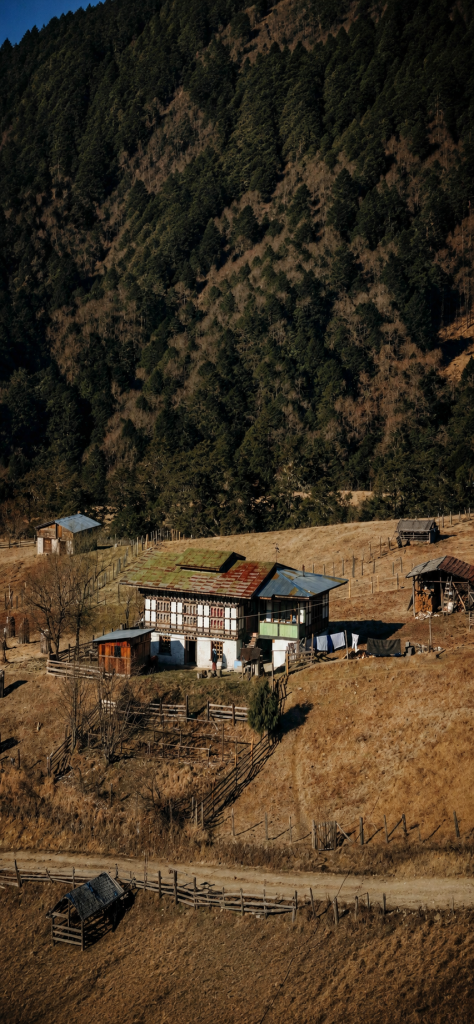
Here, travelers stay inside traditional Bhutanese homes where hospitality feels natural rather than staged. Children return from school through narrow farm paths, cattle bells echo across the valley, and dinner is prepared using ingredients grown nearby.
Meanwhile, local conservation efforts protect both the environment and community identity. During winter, endangered black-necked cranes migrate into the valley, making Phobjikha one of Bhutan’s most environmentally sensitive regions.
An Eco Friendly Bhutan journey is not about removing comfort completely. Instead, it focuses on intentional travel choices. Village stays reduce dependence on imported infrastructure. Local guides provide direct cultural insight. Regional food sourcing minimizes unnecessary environmental impact.
At the same time, travelers gain something often missing from conventional tours—space to slow down. Instead of rushing between attractions, the itinerary allows time for conversation, observation, and participation in daily Bhutanese life.
This slower rhythm changes the way travelers experience the country. Over time, the journey becomes less about sightseeing and more about awareness.
The final two nights remain fully in Paro without additional transfer days. This structure creates space for rest and reflection before departure. The hike to Taktsang Monastery becomes more meaningful after days spent moving slowly through villages and landscapes.
As the trail rises through pine forests, prayer flags appear between the trees and Paro valley opens below. Reaching Taktsang feels symbolic—a final moment connecting spirituality, landscape, and mindful travel.
By the end of the journey, Sustainable Travel Bhutan no longer feels like a tourism concept. It becomes something tangible through shared meals, preserved landscapes, community interaction, and responsible movement across the country.
The descent into Paro reveals forested hills, terraced farms, and rivers winding through narrow valleys. After arrival, you transfer to Thimphu using a low-impact shared transport approach designed to reduce unnecessary emissions. Meanwhile, the pace immediately feels different from mainstream tourism circuits. In the evening, your guide introduces the principles behind this Sustainable Travel Bhutan itinerary—community support, reduced environmental impact, and meaningful local interaction. Instead of luxury excess, the focus remains on cultural depth and responsible movement. Overnight in Thimphu.
The morning begins with a visit to local artisan workshops where weaving, thangka painting, and wood carving continue as living traditions. As you walk through quieter parts of the city, you see how Bhutan balances modernization with cultural preservation. Meanwhile, lunch is served using locally sourced produce from nearby farms. This approach supports Bhutan’s growing eco-conscious food movement while reducing imported consumption. In the afternoon, you visit a community initiative promoting waste reduction and environmental education. Overnight in Thimphu.
The drive toward Gangtey crosses Dochula Pass, where prayer flags move through cold mountain wind. As you descend into Phobjikha, the valley opens slowly—wide wetlands, scattered farmhouses, and grazing cattle replacing urban landscapes. This section defines the heart of the Carbon Neutral Tour experience. Unlike conventional sightseeing routes, the focus shifts toward slower engagement with the land and community. In the evening, you settle into one of the Phobjikha community homestays Gangtey is known for. Overnight in a traditional village homestay.
The morning begins with village activities alongside local families. Depending on the season, you may join simple farming tasks, help prepare traditional meals, or walk ancient footpaths connecting homes across the valley. Meanwhile, your guide explains how conservation and community livelihoods remain interconnected in Phobjikha. The wetlands support endangered black-necked cranes, and local protection efforts preserve both ecology and culture together. This day strongly reflects the growing preference for authentic village stays vs luxury hotels Bhutan travelers increasingly seek. Overnight in Phobjikha homestay.
Today focuses on slower movement through the valley. As you walk the Gangtey Nature Trail, pine forests open into wide marshlands filled with seasonal birdlife. Meanwhile, local guides explain traditional land-use practices that help preserve the ecosystem naturally. Lunch is prepared using ingredients sourced directly from nearby farms. This reflects the philosophy behind Eco Friendly Bhutan travel—supporting local economies while reducing environmental impact. In the evening, you visit Gangtey Monastery, where monks continue daily rituals overlooking the valley. Overnight in Phobjikha.
The route descends gradually into warmer valleys. As elevation changes, pine forests transition into rice terraces and subtropical vegetation. Meanwhile, roadside stops reveal quieter aspects of Bhutanese rural life rarely included in fast-paced itineraries. In Punakha, you visit Punakha Dzong, located between the Pho Chhu and Mo Chhu rivers. The structure reflects Bhutan’s balance between governance, spirituality, and environmental harmony. Overnight in Punakha.
The drive back to Paro feels calmer after days in rural valleys. Meanwhile, the journey slows intentionally during its final phase. There are no rushed sightseeing schedules or unnecessary detours. Upon arrival in Paro, the evening remains free for rest, local exploration, or quiet reflection. This slower pace reinforces the purpose behind the carbon-negative travel itinerary Bhutan 2026 approach. Overnight in Paro.
The hike to Taktsang begins early. As the trail rises through pine forest, prayer flags appear between the trees. Meanwhile, views across Paro valley widen with every turn. Reaching Taktsang feels symbolic rather than touristic. The monastery clings to the cliffside in silence, creating a powerful ending to the journey. After returning to Paro, the evening remains relaxed and unstructured. Overnight in Paro.
The final morning remains intentionally quiet. Without additional transfers or rushed activities, you depart directly from Paro. Meanwhile, the experience lingers through small memories—shared meals, village conversations, mountain silence, and the feeling of traveling with greater awareness. Unlike conventional itineraries focused on consumption, this journey closes with a sense of balance between traveler, culture, and environment.
Package does not include insurance of any kinds, and that you are required to obtain separate coverage from your home country or any insurance company of your choice.