The first sound arrives before sunrise. A low crane call rolls across the wetlands of Phobjikha Valley. Birding Bhutan feels different from birding anywhere else in the Himalayas because silence still dominates the landscape. Instead of crowded observation hides, this journey moves through valleys where endangered species continue to survive within protected ecosystems.
Meanwhile, the route has become one of the strongest Phobjikha & Trongsa birding circuit 2026 experiences for serious birders and wildlife photographers. The itinerary combines wetlands, river basins, and old-growth forests. As a result, travelers encounter dramatic habitat variation within a single journey.
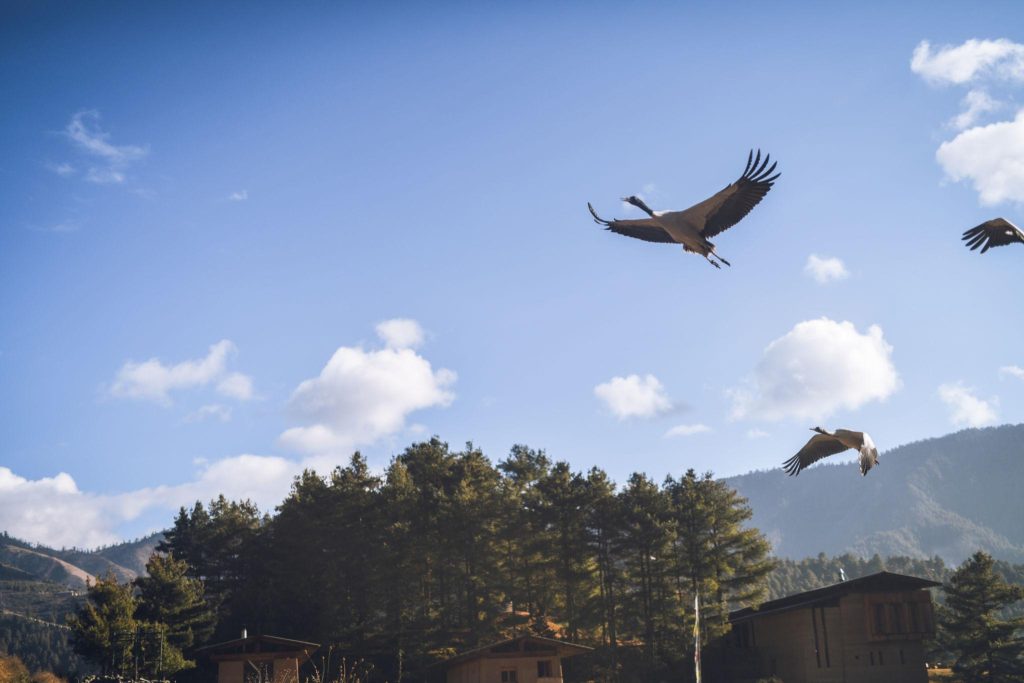
One of the defining moments of Birding Bhutan is witnessing Grus nigricollis, the endangered Black-necked Crane, arriving in Phobjikha Valley. Between November and March, more than 400 cranes migrate into the wetlands. Their arrival transforms the valley completely.
This migration also forms the foundation of the famous Black-necked crane festival tour Nov 2026 experience. During the festival, local communities celebrate the cranes through masked dances and conservation ceremonies. Unlike commercial wildlife events, the atmosphere feels deeply connected to local spiritual traditions.
Meanwhile, early mornings in the valley offer the best observation opportunities. Cranes feed quietly across frost-covered fields while mist rises from the marshlands.
Another major focus of this itinerary is the critically endangered Ardea insignis, commonly known as the White-bellied Heron. With an estimated global population of around 31 individuals, sightings remain exceptionally rare.
However, the White-bellied heron sightings Punatsangchhu river basin continues to offer one of the few realistic opportunities to observe this species in the wild. Because of this rarity, experienced birding guides Bhutan travelers depend on monitor these river systems carefully.
Observation here requires patience rather than speed. Guides study water movement, feeding behavior, and riverbank activity before positioning birders quietly along the basin.
Beyond Phobjikha, the journey enters the dense forests of Trongsa and Zhemgang. These valleys support several uncommon Himalayan species rarely encountered on conventional tours.
Birders search for Harpactes wardi, known as Ward’s Trogon, within moss-covered forest corridors. Meanwhile, higher elevations near Bumthang and Tharpaling provide strong habitat for Tragopan satyra, the Satyr Tragopan.
Early mornings are especially rewarding. Fog moves slowly through the forest while mixed flocks become active along the canopy edges. The experience feels immersive rather than rushed.
Unlike standard wildlife itineraries, this experience depends heavily on local habitat awareness. Skilled birding guides Bhutan visitors rely on understand migration timing, nesting patterns, and seasonal movement between valleys.
Meanwhile, observation techniques remain low impact. Small groups move quietly through trails, minimizing disturbance to both birds and habitat. This slower pace creates more meaningful encounters and better photographic opportunities.
Because of this approach, Birding Bhutan becomes less about collecting species and more about understanding fragile ecosystems in real time.
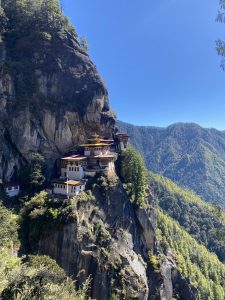
The final two nights remain fully in Paro without long transfer days. This slower ending allows travelers to absorb the experience before departure. The hike to Taktsang Monastery becomes a final moment of reflection after days spent observing wetlands, forests, and river systems.
As the trail rises through pine forests, prayer flags appear between the trees and Paro valley opens below. By the end of the journey, Birding Bhutan feels less like a tour and more like entry into a quieter relationship with the natural world.
The descent into Paro reveals layered valleys, forested ridges, and river systems that support Bhutan’s extraordinary bird diversity. After arrival, you transfer to Thimphu while watching for roadside species such as Himalayan magpies, black kites, and hoopoes. Meanwhile, the quieter pace of Bhutan becomes immediately noticeable. In the evening, your guide introduces the structure of the Birding Bhutan expedition, including migration timing, elevation zones, and target species across wetlands, forests, and river habitats. Overnight in Thimphu.
The morning begins in mixed pine and blue pine forest habitats surrounding Thimphu valley. As sunlight reaches the ridgelines, bird activity increases along forest edges and small streams. Meanwhile, likely sightings include fire-tailed sunbirds, Himalayan bulbuls, grey-winged blackbirds, and several laughingthrush species. Your birding guides Bhutan specialists explain seasonal movement patterns and habitat behavior throughout the morning. The afternoon remains slower to allow adaptation to elevation and rhythm before moving deeper into central Bhutan. Overnight in Thimphu.
he drive crosses Dochula Pass before descending into subtropical river valleys. As vegetation changes, the bird population shifts dramatically from highland forest species to riverine habitats. This region forms one of the most important areas linked to White-bellied heron sightings Punatsangchhu conservation efforts. Birders quietly scan riverbanks for Ardea insignis, the critically endangered White-bellied Heron, whose global population remains extremely low. Meanwhile, additional species may include crested kingfishers, ibisbills, and river lapwings. Overnight in Punakha.
The day begins early along quieter sections of the Punatsangchhu Basin. As mist lifts from the river, feeding activity increases among water-associated species. Meanwhile, this slower observation day allows more time for tracking movement patterns and listening for calls within dense riverside vegetation. Experienced birding guides Bhutan travelers rely on carefully position observation points without disturbing the habitat. In the afternoon, you visit smaller wetlands and agricultural zones where migratory species often gather seasonally. Overnight in Punakha.
The route climbs steadily toward Gangtey and Phobjikha Valley. Pine forests gradually open into broad wetlands surrounded by quiet farming villages. Meanwhile, temperatures become noticeably colder. This valley remains the heart of the famous Black-necked crane festival tour Nov 2026 experience. Between November and March, more than 400 Grus nigricollis cranes migrate into the valley from the Tibetan Plateau. At sunset, birders often watch cranes returning to roost across the marshlands while local villagers maintain strict conservation respect toward the species. Overnight in Phobjikha.
The morning begins before sunrise. As frost melts across the wetlands, crane groups become active in feeding zones. Meanwhile, guides carefully maintain observation distance to minimize disturbance. This day focuses heavily on wetland ecology and migration behavior connected to Crane Festival 2026 activities. Depending on timing, travelers may also witness conservation performances, school programs, and traditional masked dances honoring the cranes. Additional sightings may include Himalayan monals, rosefinches, and marshland migratory birds. Overnight in Phobjikha.
The drive toward Trongsa enters dense temperate forest habitat rich in moss-covered trees and deep valleys. Bird activity shifts noticeably as the ecosystem changes. This section offers strong opportunities for sightings of Harpactes wardi, known as Ward’s Trogon. The species remains uncommon and highly habitat-specific within forest corridors around Trongsa and Zhemgang. Meanwhile, higher elevations near Tharpaling provide ideal habitat for Tragopan satyra, the Satyr Tragopan. Mixed canopy flocks often contain barbets, yuhinas, sibias, and laughingthrushes. Overnight in Bumthang.
The return journey crosses multiple ecological zones once again. Meanwhile, roadside forest stops may produce final sightings depending on season and weather conditions. As you arrive in Paro, the atmosphere changes noticeably. After days focused on wetlands, forests, and migration corridors, the quieter valley creates space for rest and reflection. The evening remains intentionally relaxed without additional activities. Overnight in Paro.
The final full day begins with the hike toward Taktsang Monastery. As the trail rises through pine forests, occasional bird calls echo across the valley while prayer flags move through the wind. Unlike earlier days focused on species observation, this experience feels deeply reflective. The monastery’s cliffside setting creates a symbolic ending to a journey shaped by fragile ecosystems, conservation awareness, and Himalayan silence. After returning to Paro, the evening remains free for rest and final exploration. Overnight in Paro.
The final morning remains quiet and unhurried. Without additional sightseeing or transfers across Bhutan, you depart directly from Paro Airport. Meanwhile, the memory of wetlands, river systems, and Himalayan forests lingers long after departure. For many travelers, Birding Bhutan becomes less about listing species and more about understanding the fragile landscapes that continue to protect them.
Package does not include insurance of any kinds, and that you are required to obtain separate coverage from your home country or any insurance company of your choice.